How to Make a Study Timetable for Students: The Ultimate Guide to Academic Success
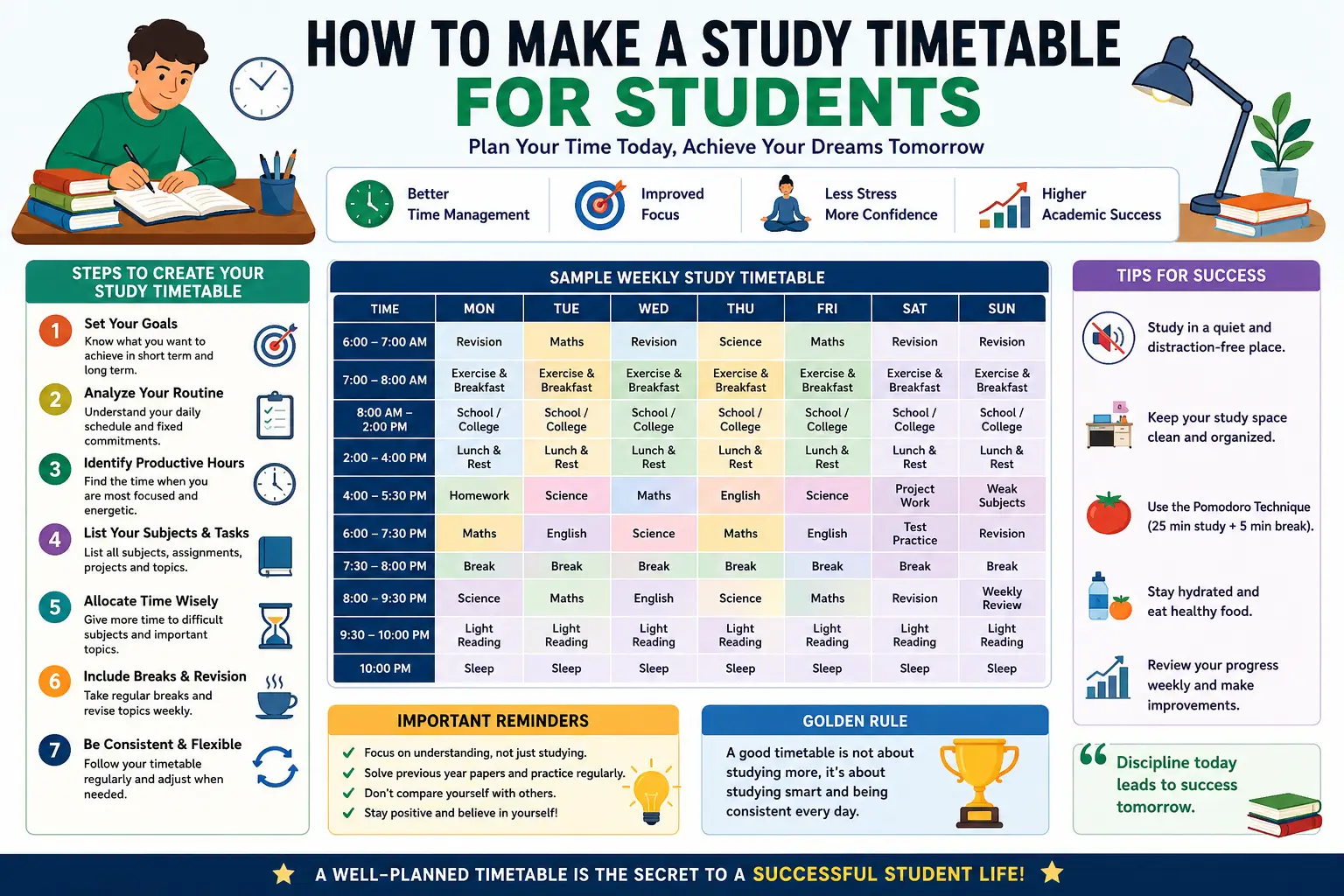
A well-structured study timetable for students ,How to Make a Study Timetable for Students,is one of the most powerful tools for academic success. Whether you are a school student preparing for exams or a college student managing multiple assignments, having a clear study plan helps you stay focused, organized, and productive. Many students struggle not because they lack intelligence but because they lack a proper system. A timetable acts like a roadmap that guides your daily study routine and prevents wasted time.
Think of your studies as a long journey. If you start driving without a destination or map, chances are you will get lost. The same thing happens when students sit down to study without a plan. They jump from one subject to another, spend too much time on easy topics, and ignore difficult chapters until exams arrive. A well-designed timetable eliminates this problem by giving every subject and task a designated place in your day.
The good news is that creating an effective study timetable is not difficult. You don’t need expensive apps, fancy planners, or complicated productivity systems. All you need is a clear understanding of your goals, available study hours, and learning priorities. In this complete guide, you will learn how to make a timetable for study at home for students, how to personalize it according to your needs, and how to maintain it consistently for long-term academic success.
Why Every Student Needs a Study Timetable
How to Make a Study Timetable for Students
A study timetable brings structure and discipline into a student’s life. In today’s world, distractions are everywhere. Social media notifications, video streaming platforms, gaming apps, and endless online content can easily consume valuable study time. Without a proper schedule, students often underestimate how much time they are wasting each day.
A timetable helps students allocate specific hours for studying, revision, assignments, and relaxation. This organized approach reduces stress because students know exactly what they need to study and when they need to study it. Instead of feeling overwhelmed by large amounts of syllabus material, students can divide their workload into smaller, manageable tasks.
Another major advantage is improved consistency. Academic success rarely comes from last-minute cramming. It comes from small daily efforts repeated over weeks and months. A study timetable encourages this habit by making study sessions a regular part of daily life. As a result, students retain information better and perform more confidently during examinations.
Benefits of Following a Study Schedule
How to Make a Study Timetable for Students
Students who follow a timetable regularly experience several benefits:
| Benefit | Impact |
|---|---|
| Better Time Management | Helps utilize every hour effectively |
| Reduced Stress | Creates clarity and control |
| Improved Focus | Eliminates decision fatigue |
| Higher Academic Performance | Ensures complete syllabus coverage |
| Better Work-Life Balance | Allows time for hobbies and relaxation |
Common Mistakes Students Make Without a Plan
Without a study timetable, students often procrastinate. They spend too much time on favorite subjects while avoiding difficult ones. Some study for several hours continuously without breaks, leading to burnout and reduced concentration. Others leave revision until the final days before exams, increasing stress and lowering performance. A timetable prevents these issues by creating balance and accountability.
Understanding Your Academic Goals
Before creating a timetable, you must understand what you want to achieve. Many students create schedules that look impressive on paper but fail because they are not connected to meaningful goals. Your timetable should support your academic objectives.
Short-term goals might include completing a chapter, improving test scores, or preparing for a weekly assessment. Long-term goals could involve achieving a certain percentage, qualifying for competitive exams, or securing admission to a dream college. Once these goals are defined, it becomes easier to allocate study hours strategically.
Imagine trying to build a house without knowing its design. You might buy materials, but you won’t know where they belong. Similarly, studying without goals leads to random effort. Goals provide direction, while timetables provide execution.
Setting Short-Term Goals
Short-term goals keep motivation high because progress becomes visible. Instead of saying, “I want to study science,” specify a target such as completing two chapters by Friday. Clear objectives make study sessions more productive and measurable.
Setting Long-Term Goals
Long-term goals act as your guiding star. Whether you are preparing for board exams, university entrance tests, or professional certifications, your timetable should consistently move you toward these larger ambitions. Every daily study session should contribute to a bigger academic outcome.
How Can I Create a Study Timetable?,How to Make a Study Timetable for Students
One of the most common questions students ask is, “How can I create a study timetable?” The answer begins with understanding your current routine. Before assigning study hours, analyze how you spend your day. Track your activities for a few days and identify time blocks that can be used more effectively.
Start by listing school hours, college lectures, coaching classes, meals, exercise, family responsibilities, and sleep. Once these essentials are included, identify the remaining hours available for study. These become your dedicated learning periods.
The next step is recognizing your peak productivity hours. Some students concentrate best early in the morning, while others perform better during the evening. Schedule difficult subjects during your most productive periods because this is when your brain processes information most effectively.
Assess Your Daily Routine
Understanding your routine prevents unrealistic schedules. If you usually wake up at 7 AM, creating a timetable that starts at 4 AM is unlikely to succeed. Build your timetable around your actual lifestyle rather than an idealized version of yourself.
Identify Productive Hours
Pay attention to when you feel most energetic and focused. Use these periods for mathematics, science, problem-solving, or other challenging subjects. Save lighter tasks such as revision, note organization, or reading for lower-energy periods.
How to Make a Timetable for Study at Home for Students
Studying at home offers flexibility, but it also presents challenges. Family activities, household noise, smartphones, and entertainment can easily disrupt concentration. Learning how to make a timetable for study at home requires creating structure within a flexible environment.
Start by establishing a dedicated study space. This doesn’t need to be a separate room. Even a small desk in a quiet corner can become an effective study zone. The key is consistency. When you sit there, your brain should automatically associate the space with learning.
A successful home-study timetable also includes clear start and end times. Many students make the mistake of studying “whenever they feel like it.” This approach often leads to procrastination. Scheduled study sessions create commitment and routine.
Creating a Distraction-Free Study Space
Remove unnecessary distractions from your study area. Keep only essential materials nearby. Turn off notifications or use focus applications that block distracting websites. A clean and organized environment promotes mental clarity and concentration.
Balancing Home Responsibilities and Studies
Students living at home often have additional responsibilities. Include these tasks in your timetable rather than treating them as interruptions. A realistic schedule acknowledges family commitments while protecting dedicated study hours.
How to Make a Good Study Timetable
A good timetable is not about studying every minute of the day. It is about studying smartly. Many students create unrealistic schedules packed with nonstop study sessions. These plans often fail within a few days because they are exhausting.
An effective timetable balances intensive study with breaks, exercise, relaxation, and sleep. The human brain needs recovery periods to absorb and retain information. Short breaks between study sessions can significantly improve focus and productivity.
Prioritizing Subjects Based on Difficulty
Assign more study time to subjects that challenge you. Difficult topics require additional practice and revision. Easier subjects can be maintained with shorter review sessions. This strategic allocation ensures balanced academic development.
Including Breaks and Revision Sessions
Revision is where learning becomes permanent. Include dedicated revision periods throughout the week. Many experts recommend spending approximately 20% to 30% of study time reviewing previously learned material. Regular revision prevents forgetting and strengthens memory retention.
How to Make a Study Timetable for School Students
School students often have fixed schedules that include classes, homework, extracurricular activities, and family time. A successful study timetable for school students should complement these responsibilities rather than compete with them.
A practical school timetable might include one to two hours of focused study after school, followed by revision sessions in the evening. Weekend schedules can accommodate longer study periods and catch-up sessions for unfinished work.
Sample School Study Schedule
How to Make a Study Timetable for Students
| Time | Activity |
|---|---|
| 6:00 AM – 7:00 AM | Revision |
| 7:00 AM – 2:00 PM | School |
| 4:00 PM – 5:30 PM | Homework |
| 6:00 PM – 7:30 PM | Subject Study |
| 8:30 PM – 9:00 PM | Quick Revision |
This structure provides consistency while maintaining balance.
How to Make a Study Timetable for College Students
College life introduces greater independence and responsibility. Unlike school students, college learners often have irregular schedules, assignments, projects, internships, and social commitments. Learning how to make aDaily Routine for Government Exam Preparation 2026: The Secret Study Plan Used by Top Rankers study timetable for college requires careful planning and adaptability.
College students should begin by reviewing lecture schedules and assignment deadlines. These commitments form the foundation of the timetable. Study sessions should then be arranged around these fixed obligations. Time blocking is particularly effective because it allows students to dedicate focused periods to specific academic tasks.
Managing Lectures, Assignments, and Exams
A successful college timetable includes:
- Lecture review sessions
- Assignment preparation
- Research work
- Exam preparation
- Group study sessions
- Personal development activities
Balancing these elements prevents last-minute stress and improves overall academic performance.
How to Make a Study Timetable for Myself
Every student is unique. This is why learning how to make a study timetable for myself is so important. Generic schedules found online may provide inspiration, but they rarely fit individual circumstances perfectly.
Personalization begins by evaluating your strengths, weaknesses, goals, and lifestyle. If mathematics is your strongest subject, it may require less study time than science or language courses. If you work part-time or participate in sports, your timetable must accommodate those commitments.
A personalized timetable is also flexible. Life is unpredictable, and occasional adjustments are necessary. The goal is consistency, not perfection. Missing one study session does not mean the timetable has failed. Simply resume the schedule as soon as possible.
Personalizing Your Schedule
Ask yourself:
- Which subjects need more attention?
- When am I most productive?
- What distractions affect me most?
- How much revision do I need?
Answering these questions allows you to create a timetable that genuinely supports your learning style.
Sample Weekly Study Timetable
| Day | Morning | Afternoon | Evening |
|---|---|---|---|
| Monday | Mathematics | School/College | Science |
| Tuesday | English | School/College | Mathematics |
| Wednesday | Science | School/College | Revision |
| Thursday | Social Studies | School/College | English |
| Friday | Mathematics | School/College | Science |
| Saturday | Practice Tests | Assignments | Revision |
| Sunday | Weak Subjects | Project Work | Weekly Review |
This timetable can be customized according to individual academic requirements and personal preferences.
Advanced Tips to Create the Perfect Study Timetable for Students
How to Make a Study Timetable for Students
Creating a study timetable is easy, but creating one that actually works for months is where most students struggle. Many students spend hours designing colorful schedules only to abandon them after a few days. The reason is simple: the timetable is often unrealistic. A successful study timetable should fit your lifestyle, learning style, academic goals, and energy levels. Instead of copying someone else’s schedule from the internet, focus on building a timetable that works specifically for you.
One of the most effective strategies is to follow the 80/20 rule. This principle suggests that 20% of your study activities produce 80% of your results. Identify the subjects, chapters, or topics that carry the highest weightage in exams and allocate more time to them. This doesn’t mean ignoring other subjects; it means prioritizing your efforts wisely. Students who study strategically often achieve better results than students who simply study longer hours.
Another important factor is consistency. Studying for two hours every day is usually more effective than studying for twelve hours on weekends. Consistent learning strengthens memory retention and reduces exam stress. Think of your brain like a muscle. Just as regular exercise produces better results than occasional intense workouts, regular study sessions create stronger academic performance than last-minute cramming.
The Importance of Time Blocking in Study Timetables
Time blocking is a highly effective method for students who want to improve productivity. This technique involves dividing your day into specific blocks dedicated to particular tasks. For example, you might allocate 6:00 AM to 7:00 AM for mathematics, 5:00 PM to 6:00 PM for science, and 8:00 PM to 8:30 PM for revision.
The advantage of time blocking is that it removes uncertainty. Instead of wondering what to study next, you already have a clear plan. This reduces decision fatigue and allows your brain to focus entirely on learning. Students often waste valuable time deciding which subject to study. A timetable eliminates this problem and creates momentum throughout the day.
Time blocking also helps students avoid multitasking. Research consistently shows that multitasking reduces productivity and increases mistakes. By focusing on one subject at a time, students can achieve deeper concentration and better understanding.
How to Balance Study, Sleep, and Personal Life,How to Make a Study Timetable for Students
Many students believe that sacrificing sleep will improve academic performance. In reality, the opposite is true. Sleep plays a critical role in memory consolidation, concentration, and cognitive performance. A student who sleeps seven to eight hours per night is generally more productive than a student who studies late into the night and gets only four or five hours of rest.
When designing your timetable, schedule adequate sleep as a non-negotiable activity. Treat sleep with the same importance as studying. A tired brain cannot absorb information efficiently, no matter how many hours are spent reading textbooks.
Personal activities should also be included in your schedule. Exercise, hobbies, family time, and relaxation are essential for maintaining motivation and preventing burnout. Students who create balanced timetables are more likely to follow them consistently over the long term.
Common Timetable Mistakes Students Should Avoid
One of the biggest mistakes students make is creating overly ambitious schedules. They fill every hour of the day with study sessions, leaving no room for breaks or unexpected events. Such schedules may look productive on paper but are extremely difficult to maintain.
Another common mistake is ignoring revision. Learning new topics is important, but revision is what transfers information into long-term memory. A good timetable should dedicate at least 20% to 30% of study time to reviewing previously learned material.
Students also tend to underestimate the importance of flexibility. Life is unpredictable. School events, family obligations, illness, or unexpected assignments may occasionally disrupt your schedule. A flexible timetable allows adjustments without causing frustration or guilt.
Best Digital Tools for Creating a Study Timetable
Technology can make timetable management easier than ever before. Students can use digital calendars, productivity applications, and task management tools to organize study schedules effectively. Apps such as Google Calendar allow students to set reminders, create recurring study sessions, and monitor their progress.
Digital tools are particularly useful for college students managing multiple courses, assignments, and extracurricular commitments. Notifications and alerts help ensure important deadlines are not missed. At the same time, students should be careful not to spend excessive time customizing productivity apps instead of actually studying.
Whether you use a digital planner or a simple notebook, the most important factor is consistency. The best timetable is not the most sophisticated one; it is the one you follow regularly.
Building Lifelong Time Management Skills
A study timetable is more than an academic tool. It teaches valuable life skills that remain useful long after graduation. Time management, discipline, goal setting, and prioritization are essential skills in every profession. Students who learn to manage their schedules effectively often become more organized adults.
Employers value individuals who can manage deadlines, prioritize tasks, and work independently. By developing these habits during your student years, you are investing in your future career as well as your academic success.
The journey toward academic excellence does not require perfection. It requires consistent effort, smart planning, and a willingness to improve over time. A well-designed study timetable provides the structure needed to turn goals into achievements. Start today, make adjustments as needed, and remember that every productive study session brings you one step closer to your dreams.
Conclusion
Creating a study timetable is one of the smartest decisions a student can make. A well-planned schedule transforms studying from a stressful activity into a structured and manageable process. Whether you are searching for how to make a timetable for students, how to make a timetable for study at home for students, or how to prepare a study timetable, the principles remain the same: set clear goals, understand your routine, prioritize important subjects, and remain consistent.
A timetable is not just a schedule; it is a commitment to your future. Every hour invested today contributes to better grades, stronger confidence, and greater opportunities tomorrow. Start small, stay consistent, and gradually refine your timetable until it perfectly matches your academic needs.
FAQs of How to Make a Study Timetable for Students
1. How many hours should students study daily?
Most students benefit from 2–5 focused study hours daily, depending on academic level and upcoming exams.
2. What is the best time to study?
The best time varies by individual. Many students perform well during early morning hours, while others focus better in the evening.
3. How often should I revise subjects?
Weekly revision is ideal, with additional review sessions before exams.
4. Can I study multiple subjects in one day?
Yes. Studying multiple subjects prevents boredom and improves overall retention.
5. How can I stick to my study timetable?
Start with realistic goals, eliminate distractions, track progress, and make adjustments when necessary.