Government Exams After 12th in India 2026: Complete Guide
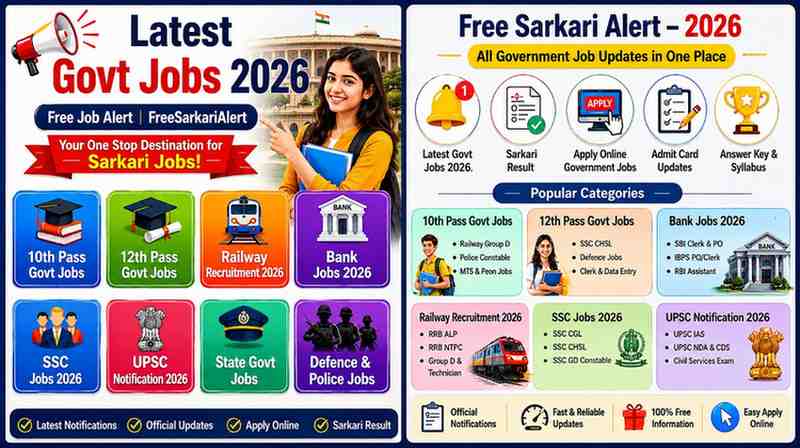
how to prepare for government exam after 12th,Finished Class 12th and wondering what comes next? You are not alone. Every single year, lakhs of Indian students set their sights on a government career — and for good reason. Stability. A fixed monthly salary. Lifelong benefits. Genuine social standing. The moment your board results are declared, an entirely new world of opportunity opens up.
Banks. Defence. Railways. SSC. Police services. The options are genuinely vast.
But here is where most students get stuck — too many exams, too little clarity. Which ones are you actually eligible for right now? What salary can you realistically expect? Which exams are coming up in 2026? This guide addresses every one of those questions and walks you through the complete landscape of government examinations available after 12th grade in India — so you can stop second-guessing and start preparing.If you want toprepare ssc cgl then click here for better strategies click now
Competitive Examinations After 12th
With so many pathways available, narrowing your focus is the first and most important step. Start by identifying where you want to land professionally. From there, the right exam becomes far easier to identify. Here is a breakdown by career domain. Keep your health wisely Read more here
Engineering — JEE
Engineering remains one of the most pursued professional tracks in India. Examinations exist at both state and national levels, depending on your preferred institution and geography.
The Joint Entrance Examination — JEE — is among the most rigorous post-12th assessments in the country. Paper 1 is typically held between January and February; Paper 2 follows in April. A strong JEE Main score unlocks admission to Centrally Funded Technical Institutions and IITs. Candidates who clear JEE Main and land in the top 2,50,500 ranks become eligible for JEE Advanced — the gateway to elite IIT programmes.
Other examinations worth considering:
- BITSAT — Birla Institute of Technology and Science Admission Test
- COMED-K — Consortium of Medical Engineering and Dental Colleges of Karnataka
- VITEEE — Vellore Institute of Technology Engineering Entrance Examination
Defence — NDA
If a career in the Army, Navy, or Air Force calls to you, the National Defence Academy examination is the most well-trodden route. The NDA exam is conducted twice annually and comprises a written test followed by a personality assessment through the SSB — Services Selection Board — interview. Both stages must be cleared to be considered a viable candidate. Registration is available online.
Additional admission routes worth exploring:
- IMU-CET — Indian Maritime University Common Entrance Test
- Indian Navy 10+2 B.Tech Cadet Entry Scheme
- Indian Navy Sailors Recruitment
Law — CLAT
Law is a demanding but rewarding field, and the Common Law Admission Test — CLAT — is its primary entry point at the undergraduate level. This national-level examination grants admission to 25 premier law institutions across India, all administered under the Consortium of National Law Universities.
Other law entrance examinations to consider:
- AILET — All India Law Entrance Test
- LSAT — Law School Admission Test
- SET — Symbiosis Entrance Test
Medical — NEET
Medicine in India operates on a single, nationally recognised examination — NEET-UG, the National Eligibility cum Entrance Test for Undergraduates. The three-hour paper covers Physics, Chemistry, and Biology across 180 questions. It is competitive, demanding, and non-negotiable for anyone pursuing an MBBS or BDS degree.
For postgraduate pathways after your undergraduate degree:
- INI-CET — Institute of National Importance Combined Entrance Test
- NEET-PG — National Eligibility cum Entrance Test for Postgraduates
Government Service Examinations
For students specifically targeting government employment, the recruitment landscape is broad. Different departments require different examinations — so researching the specific domain and post you are aiming for is essential before committing to a preparation track.
Two of the most prominent options for 12th-pass candidates:
SSC CHSL — The Staff Selection Commission Combined Higher Secondary Level examination recruits for posts including Secretariat Assistant, Postal Clerk, and Data Entry Operator.
Indian Railways — The Railways conducts multiple examinations for roles such as Station Master, Ticket Examiner, and Junior Clerk, among others.
What Exactly Are Government Exams After 12th?
These are competitive recruitment examinations conducted by central or state governments that allow candidates to enter public sector employment immediately after Class 12th — no degree required. What this practically means:
- You begin earning early, without waiting three to four years for a graduation certificate
- You enter a structured profession with defined pay scales and allowances
- Promotions follow service tenure and departmental assessments — not job-hopping or office politics
Stream-Wise Breakdown of Government Examinations
Your 12th stream does not lock you out of government jobs. The vast majority of central government positions are open to candidates from all streams. Stream-specific considerations arise primarily in defence examinations.
Science (PCM) Students
- NDA — Physics and Mathematics mandatory
- Indian Navy SSR — Physics and Mathematics required
- Indian Air Force Group X (Technical) — Physics and Mathematics essential
- Indian Air Force Group Y — Open to both PCM and PCB
- Coast Guard Navik GD — Physics and Mathematics required
- All SSC, Railway, and Police examinations — Open
Science (PCB) Students
- Indian Air Force Group Y — Open to PCB
- Coast Guard Navik DB (Domestic Branch) — Open to PCB
- All SSC, Railway, and Police examinations — Open
- NDA — Not eligible without Mathematics
Commerce and Arts Students
- SSC CHSL, SSC MTS, SSC GD Constable, SSC Stenographer — All open
- RRB NTPC, RRB Group D — Open to any stream
- State Police Constable — Accessible across streams
- India Post GDS — Any stream
- Forest Guard — Any stream in most states
- TET — Any stream, specific to the teaching vocation
Why Choose a Government Job After 12th?
- Early career entry — no extended academic delay
- Unmatched job security in an uncertain market
- Fixed, predictable salary with allowances
- Clear promotional pathways
- Social prestige and community standing
How to Effectively Prepare
Landing a government job demands structured preparation — not scattered effort across random sources. Consistent mock examinations, disciplined study schedules, attentive mentorship, and staying current with official notifications are non-negotiable.
Students targeting SSC CHSL, Railway Group D, Defence Agniveer/NDA, Police Constable, or Bank Support Staff roles benefit enormously from structured classroom programmes, simulated assessments, doubt-clearing sessions, and systematic performance tracking.
Final Word
Your Class 12th result is not a conclusion. It is a launchpad.
You do not need a degree to apply for SSC CHSL, NDA, RRB NTPC, or State Police Constable. What you need is a well-defined strategy, a study schedule you can realistically maintain, and a sober understanding of the competitive landscape you are entering.
Select two to three examinations based on your stream, age bracket, and physical eligibility. Do not attempt to prepare for five simultaneously — syllabi may overlap, but the approach for each examination is distinct. Diluted preparation across too many tests produces inadequate results across all of them. Go narrow. Go deep.
Frequently Asked Questions
Which government exam is best after 12th? The most suitable examination depends entirely on your career inclinations. Among the leading options for 2026 are NDA (officer rank), SSC CHSL (clerical), RRB NTPC (railway), and SSC MTS (multi-tasking). These cover defence, administrative, and technical sectors.
Can I get a government job directly after 12th? Absolutely. Several prominent opportunities are available without a degree — SSC CHSL (LDC/DEO), SSC Stenographer, SSC GD Constable, Railway NTPC Junior Clerk/TC, and Defence roles including Navy AA and Air Force Agniveer.
Which government exams can I appear for after 12th? The most sought-after options include NDA/NA (officer level), SSC CHSL (clerical/DEO), SSC Stenographer, RRB NTPC, Indian Army/Navy Agniveer, and State Police Constable.
What are the top 3 courses in terms of demand and salary potential in 2026? Based on current market trajectories, the top three are Artificial Intelligence and Machine Learning, Data Science and Analytics, and Full Stack Development and Software Engineering.
most saerching keyword on google <how to prepare for government exam after 12th,how to prepare for government exam after 12th,how to prepare for government exam after 12thhow to prepare for government exam after 12th,how to prepare for government exam after 12th,how to prepare for government exam after 12th,how to prepare for government exam after 12th,
how to prepare for government exam after 12th,how to prepare for government exam after 12th,how to prepare for government exam after 12th,how to prepare for government exam after 12th,how to prepare for government exam after 12th,how to prepare for government exam after 12th,how to prepare for government exam after 12th,how to prepare for government exam after 12th,how to prepare for government exam after 12th,how to prepare for government exam after 12th,how to prepare for government exam after 12th,how to prepare for government exam after 12th,how to prepare for government exam after 12th