Introduction
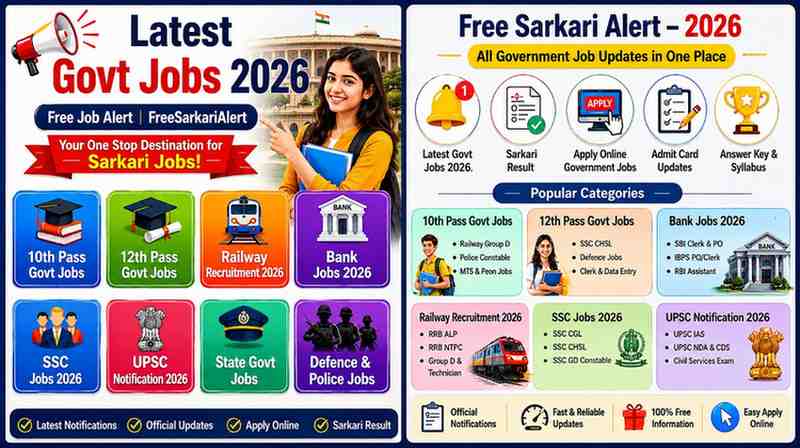
Every year, millions of graduates across India sit down with one dream — a prestigious government job. And at the top of that list sits the SSC CGL (Staff Selection Commission Combined Graduate Level) exam. ssc-cgl-preparation-strategy-for-beginners With vacancies spread across central ministries, departments, and organizations, SSC CGL offers one of the most sought-after career paths in the country.
But for beginners, the road can feel daunting. The vast syllabus, intense competition, and two-tier exam structure often leave fresh aspirants wondering: Where do I even start?
The answer is simple — with the right SSC CGL preparation strategy for beginners. This guide breaks down everything you need to know: what the exam looks like, how to study each subject, when to take mock tests, which books to pick up, and how to build a daily routine that actually works. Whether you’re a fresh graduate or switching from a different exam, this is your complete starting point.
What Is SSC CGL? A Quick Overview for Beginners
The SSC CGL exam is conducted by the Staff Selection Commission to recruit candidates for Group B and Group C posts in various Central Government departments. Posts include Tax Assistant, Inspector in CBI, Assistant Section Officer, Junior Statistical Officer, and many others — each carrying a competitive salary, job security, and government perks.
Key facts beginners must know:
- The exam has two stages: Tier 1 (Preliminary) and Tier 2 (Mains)
- Both tiers are computer-based and objective-type (MCQ format)
- There is no descriptive paper in the current pattern
- Negative marking applies — 0.50 marks deducted per wrong answer in Tier 1; 1 mark in Tier 2
SSC CGL 2026 Eligibility: Can You Apply?SSC CGL Preparation Strategy for Beginners
Before diving into preparation, confirm you meet the basic eligibility requirements.
Educational Qualification:
A Bachelor’s degree in any discipline from a recognized university is mandatory. For specialized posts like Junior Statistical Officer (JSO), a degree with Statistics as a subject is required. For Assistant Audit Officer (AAO), a background in Commerce, Economics, or related fields is preferred.
Age Limit:
The general age bracket for most SSC CGL posts is 18 to 27 years. Relaxations are available:
| Category | Age Relaxation |
|---|---|
| OBC | 3 years |
| SC / ST | 5 years |
| PwD (General) | 10 years |
| PwD (OBC) | 13 years |
| PwD (SC/ST) | 15 years |
SSC CGL Exam Pattern 2026: Know Before You Prepare
Understanding the exam structure is the first and most critical step in any preparation strategy.
Tier 1 Exam Pattern
| Section | Number of Questions | Total Marks | Time |
|---|---|---|---|
| General Intelligence & Reasoning | 25 | 50 | 60 minutes (combined) |
| General Awareness | 25 | 50 | |
| Quantitative Aptitude | 25 | 50 | |
| English Comprehension | 25 | 50 | |
| Total | 100 | 200 | 60 minutes |
Important: Tier 1 is qualifying in nature. Your final selection depends entirely on your Tier 2 score.
Tier 2 Exam Pattern
Tier 2 consists of Paper 1 (mandatory for all) and additional papers for specific posts (JSO, AAO).
Paper 1 (All posts):
- Session 1: Mathematical Abilities + Reasoning & General Intelligence (180 minutes)
- Session 2: English Language & Comprehension + General Awareness + Computer Knowledge (75 minutes)
SSC CGL Preparation Strategy for Beginners: Step-by-Step
Step 1 — Understand the Syllabus Thoroughly
The single biggest mistake beginners make is jumping into studying without reading the syllabus. Spend your first week mapping out every topic under each section. Download the official syllabus from ssc.gov.in and create a topic checklist.
Key areas to note:
- Quantitative Aptitude: Arithmetic, Algebra, Geometry, Trigonometry, Data Interpretation
- Reasoning: Analogy, Series, Coding-Decoding, Matrix, Syllogism, Blood Relations
- English: Reading Comprehension, Error Spotting, Fill in the Blanks, Idioms, One Word Substitution
- General Awareness: History, Geography, Polity, Science, Economy, Current Affairs
Step 2 — Build Your Foundation First,SSC CGL Preparation Strategy for Beginners
Beginners must resist the temptation to solve advanced-level problems before their basics are solid. Spend the first 4–6 weeks purely on concept-building.
For Maths, start with NCERT books from Classes 8 to 10 to strengthen arithmetic fundamentals. For Reasoning, practice one topic per day, moving from simple to complex. For English, focus on grammar rules and vocabulary building before attempting comprehension passages.
A strong foundation saves you time later — you’ll solve questions faster and make fewer errors.
Step 3 — Create a Realistic Daily Study Plan
Consistency beats intensity. A 6-hour daily routine is far more effective than 12-hour marathon sessions with burnout. Here is a proven daily schedule for beginners:
| Time Slot | Activity |
|---|---|
| 7:00 AM – 8:00 AM | Current Affairs & GK revision |
| 8:00 AM – 10:00 AM | Quantitative Aptitude (concepts + practice) |
| 11:00 AM – 1:00 PM | Reasoning (new topic + previous day review) |
| 2:00 PM – 4:00 PM | English (grammar rules + vocabulary) |
| 4:30 PM – 5:30 PM | Previous Year Question Practice |
| 8:00 PM – 9:00 PM | GK/Static topics (History, Polity, Science) |
Adjust timings to suit your schedule, but keep all four subjects in rotation every single day.
Step 4 — Subject-Wise Strategy for Beginners
Quantitative Aptitude>SSC CGL Preparation Strategy for Beginners
This section is where most beginners lose marks — and also where the most marks can be gained with the right approach.
Start with: Percentage, Ratio & Proportion, Average, Simple & Compound Interest, Profit & Loss. These topics carry the most questions and form the base for all other arithmetic chapters.
Once arithmetic is strong, move to: Algebra, Geometry (Circle, Triangle, Mensuration), Trigonometry, and Data Interpretation.
Beginner tip: Learn 2–3 shortcut tricks per topic but also understand the underlying logic. Tricks without understanding break down in unfamiliar question formats.
General Intelligence & Reasoning
Reasoning is considered the most scoring section of SSC CGL because with practice, accuracy can reach close to 100%.
Priority topics for beginners: Analogy, Classification, Series (Number & Alphabet), Blood Relations, Direction Sense, Syllogism, and Coding-Decoding. These appear frequently and are beginner-friendly.
Advanced topics to pick up once basics are clear: Cube & Dice, Matrix, Figure-based problems, and Non-verbal Reasoning.
Beginner tip: Practice reasoning questions with a timer from day one. Speed matters as much as accuracy in this section.
English Language & Comprehension
English is the most feared section among Hindi-medium aspirants, but it is also one of the most scoring once you focus on the right things.
High-priority areas: Error Detection, Sentence Improvement, Cloze Test, and One Word Substitution. These appear in every SSC CGL paper and follow predictable patterns.SSC CGL Preparation Strategy for Beginners
Build vocabulary: Learn 10 new words daily using a vocabulary notebook. Focus on commonly asked idioms and phrases since SSC CGL frequently tests these.
Beginner tip: Read one English editorial daily — The Hindu or Indian Express. This builds comprehension speed, sentence structure understanding, and passive vocabulary simultaneously.
General Awareness (GK & Current Affairs)
GK is the section where consistent daily effort shows the fastest results. No problem-solving needed — just exposure and revision.
Static GK priorities: Indian History (especially Modern India), Indian Polity (Constitution basics, Fundamental Rights, Parliament), Geography (rivers, mountains, soil types), and Science (Physics laws, Chemistry reactions, Biology basics).SSC CGL Preparation Strategy for Beginners
Current Affairs: Cover the last 6 months before your exam date. Read monthly current affairs PDFs, focusing on national appointments, government schemes, sports awards, science & technology news, and economic data.
Beginner tip: Use the “newspaper headline + one-line note” method. Write the headline and a single sentence of context each morning. This builds long-term retention without lengthy note-making.SSC CGL Preparation Strategy for Beginners
How Many Months Does SSC CGL Preparation Take for Beginners?
The honest answer depends on your starting point, but here is a realistic roadmap:
6-month plan (ideal for most beginners):
- Months 1–2: Concept building across all four subjects
- Month 3: Topic-wise practice and previous year papers (topic-specific)
- Month 4: Full-length previous year paper solving
- Month 5: Mock test series (minimum 2 full tests per week)
- Month 6: Revision, weak area drilling, daily mock tests
3-month plan (if you have prior SSC exposure):SSC CGL Preparation Strategy for Beginners
- Month 1: Rapid syllabus revision + topic-wise practice
- Month 2: Previous year papers + sectional mock tests
- Month 3: Full mock tests daily + error analysis
The key is not how many months you have — it is how structured and consistent you are within those months.
Best Books for SSC CGL Preparation (Beginner-Friendly List)SSC CGL Preparation Strategy for Beginners
| Subject | Recommended Book | Author/Publisher |
|---|---|---|
| Quantitative Aptitude | Quantitative Aptitude for Competitive Exams | R.S. Aggarwal |
| Quantitative Aptitude | Fast Track Objective Arithmetic | Rajesh Verma |
| Reasoning | A Modern Approach to Verbal & Non-Verbal Reasoning | R.S. Aggarwal |
| English | Objective General English | S.P. Bakshi |
| English | Word Power Made Easy | Norman Lewis |
| General Awareness | Lucent’s General Knowledge | Lucent Publications |
| SSC CGL Practice | Kiran’s SSC CGL Previous Year Papers | Kiran Prakashan |
For beginners, start with one book per subject and master it before picking up additional references. Having five books open at once is one of the most common mistakes new aspirants make.
The Role of Mock Tests in Your SSC CGL Preparation
Mock tests are not just practice — they are the most accurate predictor of your exam-day performance. Many beginners delay mock tests because they feel “not ready.” This is a critical error.
Start mock tests after completing 60% of your syllabus preparation. The remaining gaps will be visible in your performance, and you can fill them faster because you have already identified them.
How to use mock tests effectively:SSC CGL Preparation Strategy for Beginners
- Attempt the mock under strict exam conditions: timer on, no interruptions
- After each test, spend equal time analysing your mistakes as you spent attempting it
- Track three things per test: accuracy percentage, time per section, and types of errors (conceptual, careless, or time-related)
- Aim to attempt at least 25–30 full mock tests before your Tier 1 exam date
Sectional mock tests are also valuable for beginners — they let you drill weak areas without the pressure of a full-length test.
Previous Year Papers: Your Most Underrated Preparation Tool
SSC CGL has predictable question patterns. The commission tends to repeat similar concepts (though not exact questions) across years. Solving the last 5–7 years of question papers gives you three major advantages:
- You understand which topics are asked most frequently — so you prioritize correctly
- You get familiar with the language, format, and difficulty level of real questions
- You build exam-taking stamina without the pressure of a mock test environment
Aim to solve at least one full previous year paper every weekend once you are past the basic concept-building phase.
Common Mistakes Beginners Make (And How to Avoid Them)
Ignoring the syllabus: Studying random topics without a structured syllabus map leads to wasted effort on low-weightage areas.
Skipping English preparation: Many Hindi-medium aspirants avoid English until the last moment. This section can be turned into a strength with 45 minutes of daily practice.
Not revising GK regularly: Static GK forgotten in Month 1 is useless in Month 6. Build weekly GK revision slots into your schedule.
Attempting mock tests without analysis: A mock test without error analysis is just a test. It adds no value to your preparation unless you study your mistakes.
Chasing too many resources: One good book per subject, completed thoroughly, beats five half-read books every time.SSC CGL Preparation Strategy for Beginners
Tips from SSC CGL Toppers: What Actually Works
- Start every study session with a 10-minute recap of the previous session’s content
- Keep a dedicated “error diary” — write down every question you got wrong and why
- Practice calculations mentally — reduce calculator dependency to increase speed
- Learn to attempt known questions first; skip and return to difficult ones
- On exam day, trust your preparation — anxiety burns time that accuracy earns
Is Coaching Necessary for SSC CGL Beginners?
Classroom coaching gives beginners a structured environment, faculty doubt resolution, and peer motivation. If you are someone who struggles with self-discipline or lacks access to quality study material, joining a reputed coaching centre like Career Power — with expert-led classes across 70+ centres in India — can make a significant difference.
That said, self-study backed by quality books, online mock tests, and disciplined scheduling has produced thousands of SSC CGL toppers. The medium matters less than the method.SSC CGL Preparation Strategy for Beginners
If you choose online preparation, platforms with live classes, recorded lectures, and structured test series give you the best of both worlds — flexibility of home learning with the rigour of structured coaching.you can visithere for any official notification click here
Frequently Asked Questions
Q1. Is SSC CGL difficult for beginners?
SSC CGL is competitive but absolutely crackable for beginners with a structured strategy, consistent effort, and regular mock test practice. Most successful candidates crack it within 6–12 months of dedicated preparation.
Q2. How many hours should a beginner study for SSC CGL?SSC CGL Preparation Strategy for Beginners
5–7 hours daily is the sweet spot. Quality and consistency matter more than cramming long hours. Distribute time evenly across all four subjects.
Q3. Which subject should I start with?
Start with Quantitative Aptitude and Reasoning, as they require concept-building time. Run English and GK alongside from Day 1 with smaller daily slots.
Q4. Can I crack SSC CGL in 3 months?
It is possible with prior exam exposure and strong fundamentals. For absolute beginners, 6 months gives a more comfortable and thorough preparation window.
Q5. Which is better — online or offline coaching for SSC CGL?
Both work. Choose based on your learning style, budget, and location. Offline coaching suits those who need structure and direct teacher interaction; online suits flexible learners with self-discipline.
Final Words: Your SSC CGL Journey Starts Today
The right time to begin your SSC CGL preparation strategy is not next month — it is now. Every day of delay is a day of practice someone else is putting in. The aspirants who crack SSC CGL are not necessarily the most intelligent ones in the room; they are the most consistent, most organized, and most willing to learn from their mistakes.
Map your syllabus. Build your schedule. Open your first book today. And remember — the exam does not reward perfection; it rewards persistence.
most searches keyword online for studenst >how many months for SSC CGL preparation,SSC CGL preparation for working professionals,SSC CGL preparation for freshers,SSC CGL beginner study plan,how to crack SSC CGL in first attempt,why SSC CGL is popular among graduates,SSC CGL Tier 2 answer key 2026,SSC CGL age limit and relaxation,SSC CGL preparation strategy for beginners,how to prepare for SSC CGL,SSC CGL preparation tips,SSC CGL online coaching
All the best for your SSC CGL 2026 preparation!